Seasonal Reward Layers: Mapping Tiered Cashback Structures Across Summer Cricket Tours and Clay-Court Tennis Circuits
Written by Rosa Carter · Nov 2, 2026
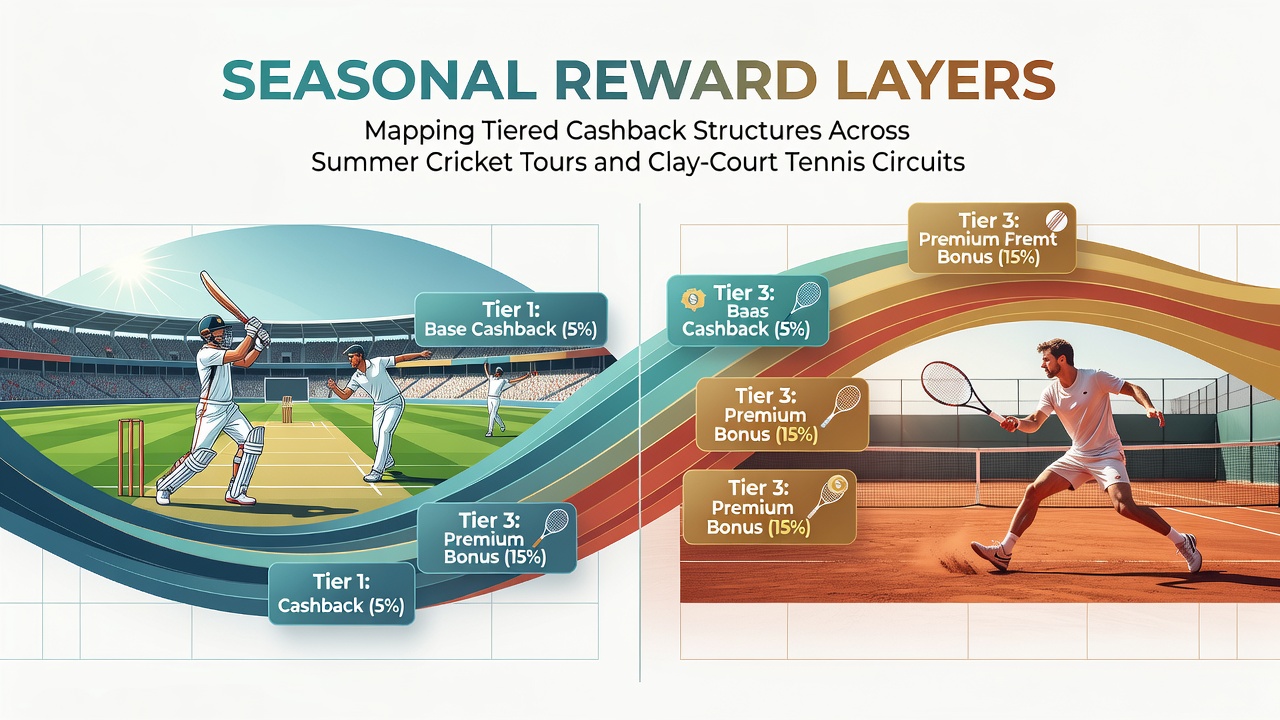
Seasonal Reward Layers: Mapping Tiered Cashback Structures Across Summer Cricket Tours and Clay-Court Tennis Circuits
Operators structure tiered cashback programs around major summer cricket tours and clay-court tennis circuits by aligning reward brackets with event calendars that stretch from May through September each year. These layers typically begin at entry-level percentages for modest wager volumes before scaling upward as participants accumulate qualifying bets on matches such as Test series in England and Australia or the French Open swing across Europe. Data from industry analyses shows how the top tiers often unlock once cumulative stakes exceed set thresholds tied directly to broadcast schedules and player participation lists.
Core Mechanics of Tiered Cashback Programs
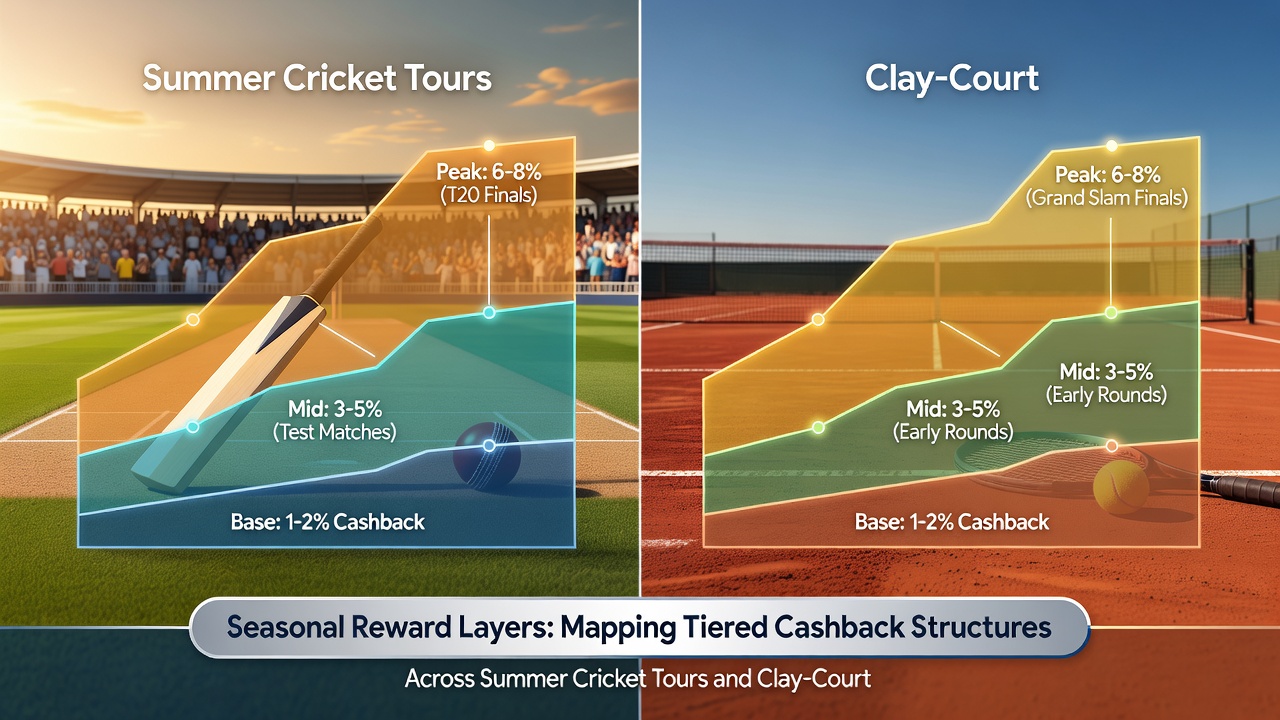
Bookmakers calculate cashback through progressive bands where lower volumes return smaller percentages while higher activity unlocks increased rebates paid weekly or monthly. Observers note that cricket tours generate extended windows for accumulation because five-day Tests and multi-week T20 leagues create repeated betting opportunities whereas clay-court tennis concentrates volume around two-week Grand Slam blocks. Research indicates the structure rewards consistency across both sports rather than isolated spikes since operators reset brackets seasonally to maintain engagement through the full circuit calendar.
Cricket Tour Applications and Volume Triggers
Summer cricket schedules feed directly into cashback mapping because bilateral series and franchise tournaments overlap in ways that allow bettors to layer stakes across formats. One documented approach uses separate tracks for Test match markets and limited-overs contests so that volume from each contributes toward the same tier progression. Figures from regulatory reviews in Australia reveal that operators adjust rebate percentages upward during peak tour periods when attendance and television audiences rise simultaneously. Those tracking these programs find the highest tiers frequently require combined activity across multiple matches rather than single-event wagers which spreads risk while encouraging sustained participation.
Clay-Court Tennis Circuit Integration
Clay-court events concentrate betting interest around slower surface dynamics and longer rally patterns that influence market types such as set handicaps and total games. Cashback structures here often incorporate separate qualifiers for individual tournaments within the broader European swing so participants can advance tiers through consistent play on multiple surfaces. Evidence from Canadian provincial gaming reports highlights how operators cap maximum rebates per event to prevent overexposure during the compressed clay season when several high-profile tournaments run concurrently. This approach maintains balance between cricket's longer arcs and tennis's more condensed schedule while still rewarding cross-sport volume for eligible accounts.
Overlap Periods and Cross-Sport Layering
June and July frequently see simultaneous cricket tours and clay-court tournaments which creates opportunities for operators to offer unified tier systems that credit activity from both sports toward shared cashback brackets. Analysts at the Australian Gambling Research Centre have documented how these overlaps lead to accelerated tier progression for multi-sport participants. The mechanics require clear tracking systems that separate cricket and tennis wagers yet combine them for final rebate calculations which demands precise software integration from the operator side.
November 2026 Planning Cycles
By November 2026 many operators finalize tier structures for the following summer by reviewing performance data from prior cricket tours and tennis circuits. Planning documents indicate adjustments often focus on threshold amounts and rebate percentages based on observed participation rates across regions. Those reviewing historical patterns note that programs incorporate lessons from weather disruptions or schedule changes that affected betting volumes in previous seasons. This forward-looking process ensures cashback layers remain aligned with evolving event calendars while maintaining compliance across multiple jurisdictions.
Regional Variations in Implementation
European operators tend to emphasize clay-court tennis brackets more heavily because of proximity to major events whereas Australasian platforms allocate greater weight to cricket tours. Studies published in the Journal of Gambling Studies show these geographic differences influence tier design with some programs offering sport-specific sub-layers that still feed into overarching cashback totals. The result creates distinct pathways that nonetheless converge at higher tiers for dedicated multi-event bettors.
Conclusion
Tiered cashback programs continue to evolve around the distinct rhythms of summer cricket tours and clay-court tennis circuits by balancing volume thresholds with seasonal calendars. November 2026 reviews feed directly into refinements that account for overlapping schedules and regional preferences. Observers tracking these systems find the layered approach supports sustained engagement across both sports through structured progression rather than isolated promotions.